Waterproofing Services NJ for Preventing Foundation Settling
Foundation settling rarely starts with a dramatic crack or a visibly leaning wall. More often, it begins quietly, with moisture moving where it should not, soil shifting a little more than usual, and small structural stresses building season after season. In New Jersey, that pattern is especially common. The state’s mix of coastal exposure, freeze-thaw cycles, clay-heavy soils in some counties, older housing stock, and frequent heavy rain creates exactly the kind of environment where water and foundations get into a long, expensive fight.
Homeowners often think of settling as a pure structural problem and waterproofing as a basement comfort upgrade. In practice, the two are tightly linked. Water changes soil behavior, hydrostatic pressure, drainage paths, and the load conditions around a footing. If those issues go unaddressed, minor movement can become differential settling, and differential settling is where repair costs climb fast.
That is why the best waterproofing services NJ homeowners can invest in are not just about keeping a basement dry. They are about controlling the conditions around the foundation so the building has a better chance of remaining stable over time.
Why water plays such a large role in foundation movement
A foundation does not sit in isolation. It depends on the soil around and beneath it to carry loads consistently. Once that soil becomes too wet, too dry, unevenly compacted, or repeatedly disturbed by expansion and contraction, the support below the house changes.
This is where many property owners misunderstand the risk. They assume water only becomes a problem when it enters the basement. By that stage, the issue has often been developing outside for months or years. Saturated soil can lose bearing capacity. Clay-rich soils can swell when wet and shrink when dry. Water moving along the footing line can wash fine particles away, creating voids or weak spots. In winter, trapped moisture can freeze, expand, and stress both the foundation and adjacent soil. When spring arrives, the thaw can leave everything looser than it was before.
I have seen basements in northern and central New Jersey where the visible symptom was a damp wall, but the real problem was the downspout discharging three feet from the corner of the house. Over time, that concentrated runoff softened the soil near one section of footing. The owner called for leak control. What they actually needed was a drainage correction plan that protected the structure.
Waterproofing services are most effective when they address that full chain of cause and effect, not just the final symptom inside the basement.
New Jersey conditions make the problem more complex
New Jersey is not one uniform soil and weather zone. Conditions vary sharply from Bergen to Monmouth, from Mercer to Ocean County, and from older urban lots to newer suburban developments. Yet several patterns show up again and again.
Older homes often have foundations that were built before modern drainage standards became common. Exterior waterproof membranes may be nonexistent or long past their useful life. Perimeter drains, if present, may be crushed, silted, or disconnected. Basement walls may have been patched several times without solving the source of moisture entry.
Many properties also have grading issues that developed gradually. Settled walkways, added landscaping, patio installations, and even heavy mulch buildup can alter how water moves near the home. A yard that looked harmless ten years ago may now direct stormwater straight toward the foundation.
Then there is the weather. New Jersey gets intense rains, coastal storms, snowmelt events, and humid summers. A foundation system that seems fine in dry weather can be overwhelmed during a week of repeated rain. If the soil around the home swings from very dry to saturated several times each year, the structure experiences repeated movement stresses.
That is why Waterproofing services NJ contractors who understand local conditions tend to outperform generic one-size-fits-all approaches. The right fix for a home in a high water table area near the shore may be completely different from the right fix for a house in an https://www.google.com/maps?cid=15618896523686751270 inland neighborhood with expansive clay and poor grading.
Settling versus normal house movement
Every house moves a little. Materials expand and contract. Minor shrinkage cracks happen. Floors may creak more in winter than in summer. That does not automatically mean the foundation is failing.
What matters is the pattern, pace, and location of the movement. A hairline crack in a basement slab is common. A widening stair-step crack in masonry, paired with sticking doors upstairs and recurring water seepage at one corner, deserves a closer look. Uneven settlement is the real danger because one part of the house is dropping or shifting differently from another.
Water is often the hidden factor that turns acceptable movement into structural concern. When one side of the house stays relatively dry and stable while another side repeatedly saturates, support conditions become unbalanced. The house responds to that imbalance.
Homeowners sometimes ask whether waterproofing alone can stop settling. The honest answer is that it depends on how far the process has gone. If water management is the main driver and structural damage is still limited, correcting drainage and moisture intrusion can prevent more movement and protect the foundation from further stress. If substantial settlement has already occurred, waterproofing may need to be paired with underpinning, piering, slab stabilization, or wall repair.
A sound contractor will tell you where waterproofing ends and structural correction begins. If someone insists every crack can be fixed with one product or one interior drain, that is usually a red flag.
The warning signs worth taking seriously
The first clues tend to appear in ordinary daily annoyances. A basement that smells musty after every hard rain. A door that rubs at the top corner. A fine crack that reappears after being patched. Water staining along the base of a wall. Efflorescence, that chalky white residue on masonry, is another common indicator that moisture is moving through the wall even if liquid water is not visibly pooling.
Some signs deserve faster attention because they suggest ongoing movement rather than old cosmetic damage.
- Cracks that widen over time, especially stair-step or diagonal cracks
- Basement seepage that returns after each storm
- Doors or windows that suddenly stick in one part of the house
- Sloping or uneven floors near foundation walls
- Gaps appearing between walls, trim, or masonry joints
One sign on its own may not mean serious settling. Several together usually mean the home needs a real inspection, not just another tube of caulk.
How waterproofing actually helps prevent settling
When people hear “waterproofing,” they often picture a wall coating. Coatings have their place, but they are only a small part of serious foundation protection. Effective waterproofing is better understood as moisture management. The goal is to keep water from building pressure against the foundation, entering through weak points, or destabilizing the surrounding soil.
Exterior drainage is often the first and most important line of defense. If roof runoff is not carried well away from the house, if the yard pitches inward, or if hardscape traps water near the walls, the soil next to the footing stays too wet. Correcting those conditions reduces saturation cycles and helps preserve the soil’s ability to support the structure consistently.
Exterior membranes and drainage boards can also matter, especially on older homes where the wall is directly exposed to wet soil. These systems do more than block liquid water. When installed properly, they help direct groundwater down to a perimeter drain instead of allowing it to press laterally against the wall.
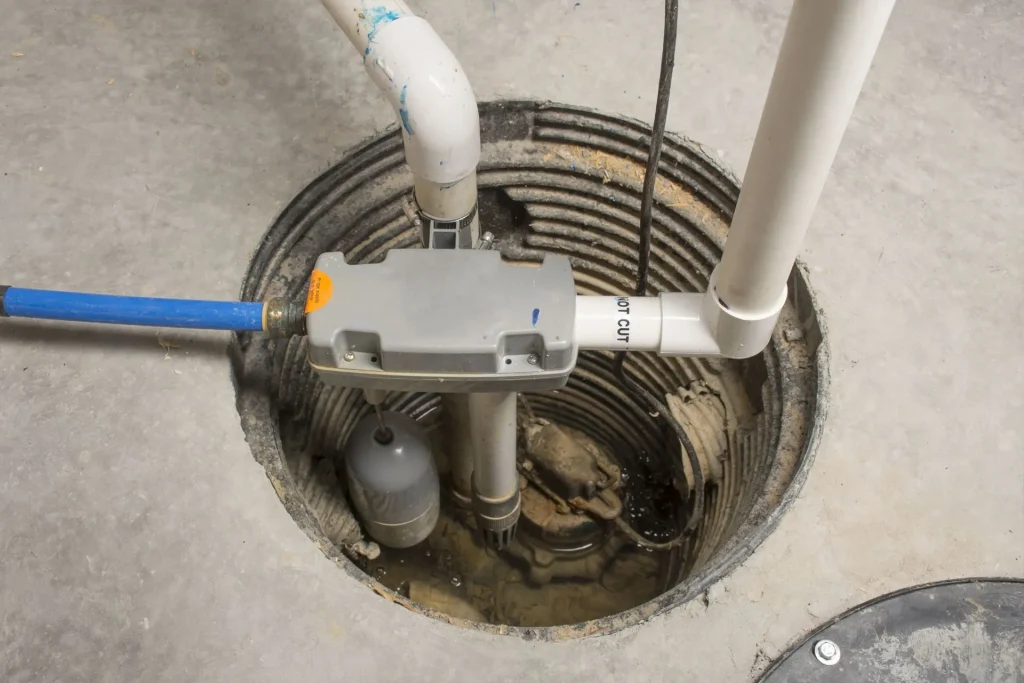
Interior drainage systems have a different role. They do not stop water from reaching the outside of the foundation, but they can safely manage intrusion that does occur, relieving pressure and protecting the basement interior. In many New Jersey homes, especially where excavation is difficult or site access is tight, an interior system with a sump pump is a practical part of the overall strategy. It just should not be mistaken for a complete exterior drainage solution when exterior issues are severe.
Crack injection, cove joint treatment, sump discharge management, vapor barriers, and dehumidification all contribute too, but only when used in the right context. The best Waterproofing services start with diagnosis, not product selection.
The connection between hydrostatic pressure and structural stress
Hydrostatic pressure is one of those terms contractors use often, but homeowners do not always get a clear explanation of what it means. Put simply, when soil around the foundation becomes saturated, water pressure builds against below-grade walls and under slabs. That pressure pushes inward and upward. Over time, it can force water through porous concrete, joints, and cracks. It can also increase wall bowing and worsen structural weakness.
That matters for settling because a foundation under persistent water pressure is not just getting wet. It is being loaded in ways it was never meant to handle continuously. If one section of the wall is under more pressure than another, or if drainage is uneven around the perimeter, the resulting stress pattern can contribute to movement and cracking.
I have walked through basements where the owner focused on one visible wall crack, but the more telling detail was the constant damp strip running around the slab edge. That usually points to perimeter water pressure. In those cases, simply sealing the crack often fails because the pressure remains. The water finds another path, and the underlying support conditions do not improve.
Exterior fixes that do the heavy lifting
Most lasting foundation protection starts outside. It is less glamorous than interior finishing work, but it is where many of the biggest gains happen.
Proper grading is one of the simplest and most overlooked corrections. The ground should carry water away from the house, not collect it near the wall. Even a subtle reverse slope can trap significant runoff during storms. Add compacted fill where needed, but do it thoughtfully. Dumping loose topsoil against a house without proper compaction often creates a temporary cosmetic fix that settles again.
Gutters and downspouts also deserve more respect than they usually get. A clogged gutter can dump hundreds of gallons near the foundation during a strong storm. Short downspouts are another common failure point. Water should be directed far enough away that it does not simply soak back toward the footing. On tight lots, that may require buried drain lines or carefully planned discharge locations.
For homes with chronic exterior moisture exposure, excavation and foundation wall waterproofing may be justified. That process usually involves exposing the wall, cleaning it, repairing defects, applying a waterproof membrane, installing drainage board, and adding or replacing footing drains. It is disruptive and not inexpensive, but for some structures it is the only way to address the root of the problem.
French drains, swales, catch basins, and curtain drains can also help manage site water before it reaches the foundation. The key is matching the system to the lot. I have seen yards where a simple surface swale solved what years of basement patching could not.
When interior waterproofing is the right choice
Interior systems are sometimes dismissed unfairly. They are not a shortcut when designed and installed for the right reason. In many basements, especially those with limited excavation access or neighboring structures close by, an interior perimeter drain and sump system is the most practical way to manage water reliably.
A good interior system intercepts water at the wall-floor joint or below the slab, then moves it to a sump basin for discharge away from the house. This reduces standing water and relieves some pressure at the interior edge. Pair that with a battery backup sump pump in outage-prone areas, and the system becomes much more dependable during storms, which is when homeowners need it most.
Still, interior waterproofing should be framed honestly. It manages water after it reaches the foundation envelope. It does not correct poor grading, concentrated roof runoff, or saturated backfill outside the wall. If foundation settling risk is tied to unstable exterior moisture conditions, an interior system alone may not be enough.
The right contractor will explain that distinction rather than oversell a single method.
Where waterproofing stops and structural repair begins
There is an important moment in some projects where moisture control is necessary but not sufficient. If the foundation has already settled significantly, if walls are rotating, or if footings have lost support, waterproofing is only part of the recovery plan.
This is where experienced judgment matters. A homeowner may hear terms like helical piers, push piers, underpinning, carbon fiber straps, wall anchors, or slab lifting. Those systems serve different purposes. Some stabilize and transfer loads to deeper soils. Others resist lateral wall movement. Some address slab settlement rather than footing failure.
Waterproofing supports these repairs by controlling the moisture conditions that contributed to the problem in the first place. Without that follow-through, structural correction can be undermined by the same drainage failures that caused the movement.
One of the most responsible project sequences is to address active water management first or at least simultaneously, then carry out structural stabilization with a clear understanding of how site moisture will be controlled going forward.
What a thorough inspection should cover
A real waterproofing and settlement assessment should feel more like an investigation than a sales visit. The contractor should look at the whole property, not just the wet corner in the basement.
They should examine roof drainage, downspout discharge, grading, nearby hardscape, signs of standing water, crack patterns, interior moisture marks, sump performance, and any indication of differential movement in upper levels of the house. In some cases, they may recommend bringing in a structural engineer, especially when cracks are significant or movement appears ongoing.
Homeowners should expect clear explanations about probable causes, not just a menu of products. If the recommendation jumps straight to a coating or pump without discussing exterior drainage, that is usually incomplete. If the seller claims settling can be ruled out without looking at the structure above the basement, that is not much better.
A useful inspection often includes moisture readings, elevation observations, and careful mapping of cracks or seepage points. The goal is to separate cosmetic symptoms from structural risk and to determine whether water is the main driver, one of several contributors, or just a secondary issue.
Choosing among waterproofing services NJ homeowners are offered
Not all contractors approach this work with the same level of rigor. Some are strong on basement drainage but weak on structural interpretation. Others are capable excavators but may overlook interior moisture behavior. The best results usually come from firms that understand both building science and local site conditions.
A few evaluation points tend to matter more than polished marketing.
- They explain causes before prescribing a system
- They distinguish moisture control from structural stabilization
- They tailor recommendations to the lot, soil, and house type
- They discuss pump discharge, backup power, and maintenance
- They provide a scope that is specific, not vague
Ask direct questions. Is the proposed system meant to prevent exterior saturation, manage interior intrusion, or both? If settlement is suspected, do they recommend engineering input? What happens to collected water after it leaves the sump? How will the work affect landscaping, walkways, or finished basement areas? Practical answers reveal experience quickly.
Maintenance matters more than many owners expect
Even excellent waterproofing work needs periodic attention. This is one place where homeowners can protect their investment without spending much money.
Keep gutters clear. Check downspout extensions seasonally. Make sure sump pumps cycle properly before heavy rain seasons. Watch for discharge lines that freeze in winter or clog with debris. If landscaping is changed, confirm that new beds, edging, or patios have not altered drainage toward the house. After any major storm, walk the perimeter and look for erosion, ponding, or water trails.
I have seen homes with solid drainage systems develop new problems simply because a buried discharge line became blocked and no one noticed until the basement took on water during a storm. The original waterproofing was not faulty. The maintenance was.
The same goes for minor cracks or damp spots. Document them. A dated photo every few months can help reveal whether something is stable or slowly worsening. That record is often more useful than memory when deciding whether to call in a professional.
Cost, value, and avoiding the wrong economy
Waterproofing and foundation work are not cheap, and they should not be sold as impulse purchases. At the same time, delaying corrective work can be far more expensive. A few thousand dollars spent on drainage improvements at the right moment can prevent a structural repair bill that runs much higher later.
The challenge is knowing where spending produces real protection. A low-cost interior patch may be enough for a small isolated crack with no broader moisture pattern. It is a poor economy if the property has failed grading, overloaded gutters, and active settlement signs. On the other hand, a full excavation job is not automatically justified for every damp basement. Sometimes the smartest fix is simpler, focused, and based on actual site conditions.
Value comes from correct diagnosis and a scope that addresses the real mechanism of failure. Homeowners should be wary of both extremes, the too-good-to-be-true quick fix and the oversized proposal that treats every basement as a total rebuild.
The practical goal: stable soil, controlled water, less movement
Preventing foundation settling is rarely about one dramatic intervention. It is usually about controlling a sequence of smaller forces before they compound. Keep roof water away from the house. Reduce saturation near the footing. Relieve hydrostatic pressure. Manage groundwater responsibly. Repair cracks in context, not in isolation. Stabilize structure when needed, then maintain the drainage systems that protect it.
That is the real value of well-executed Waterproofing services NJ homeowners rely on. Done properly, they do more than dry out a basement. They help preserve the support system beneath the home, reduce the risk of uneven movement, and protect one of the most expensive parts of the property from damage that tends to get worse, not better, with time.
A dry basement is nice. A stable foundation is essential. When the work is approached with that priority in mind, waterproofing becomes a preventive structural strategy, not just a moisture-control upgrade.
ARD Waterproofing
Address: 98 Smull Ave, West Caldwell, NJ 07006
Phone number: +12016465936
FAQ About Waterproofing Services NJ
How much can waterproofing cost?
Stephanie holds a bachelor's degree in journalism from California State University, Long Beach. Basement waterproofing costs around $13,640 on average for a 1,000-square-foot basement, but estimates can range from $12,447–$14,833, depending on the severity of the issue.
Which company is best for waterproofing?
The "best" company depends on your specific need—whether you are looking for local contractors to fix a wet basement or global manufacturers providing commercial-grade chemicals.
What is the best time to do waterproofing of your home?
As the rains subside, it makes for the perfect time to work on waterproofing your home. With no high temperatures and harsh rains to disrupt the process of waterproofing your home, you get to rapidly protect your home in time.