Basement Waterproofing NJ: Key Benefits of Installing a Sump Pump

A wet basement rarely starts as a dramatic event. More often, it begins with a faint musty smell after heavy rain, a dark line creeping up a foundation wall, or a puddle that shows up in the same corner every spring. Homeowners in New Jersey see this pattern all the time. The state’s weather swings, dense development, older housing stock, and pockets of poor drainage create perfect conditions for groundwater trouble. By the time water is visible on the floor, the problem has usually been building for a while.
That is why sump pumps play such a central role in effective basement protection. They are not the whole solution in every house, but in the right setting, they are the workhorse that keeps water from turning a usable lower level into a constant maintenance issue. If you are thinking seriously about Basement Waterproofing NJ, understanding what a sump pump does, when it helps, and how it fits into a broader waterproofing plan can save you from expensive repairs and recurring frustration.
Why New Jersey basements are especially vulnerable
New Jersey homes deal with a mix of conditions that make basement moisture difficult to ignore. In one town, the issue may be a high water table. In another, it is heavy clay soil that holds water against the foundation. Along the shore, storm intensity and drainage patterns can create seasonal pressure on below-grade walls. In older inland neighborhoods, homes may have stone or block foundations that were never designed with modern waterproofing standards in mind.
Add freeze-thaw cycles, sudden downpours, snowmelt, clogged footing drains, and aging grading around the house, and water has plenty of opportunities to find its way in. Many homeowners first focus on the visible symptom, such as seepage through a crack or water where the wall meets the floor. The deeper issue is often hydrostatic pressure. When soil around the home becomes saturated, that water pushes against the foundation. If there is no reliable relief path, the basement becomes the release point.
A sump pump provides that relief path. It gives water somewhere to go before it can accumulate under the slab or rise into the living space.
What a sump pump actually does
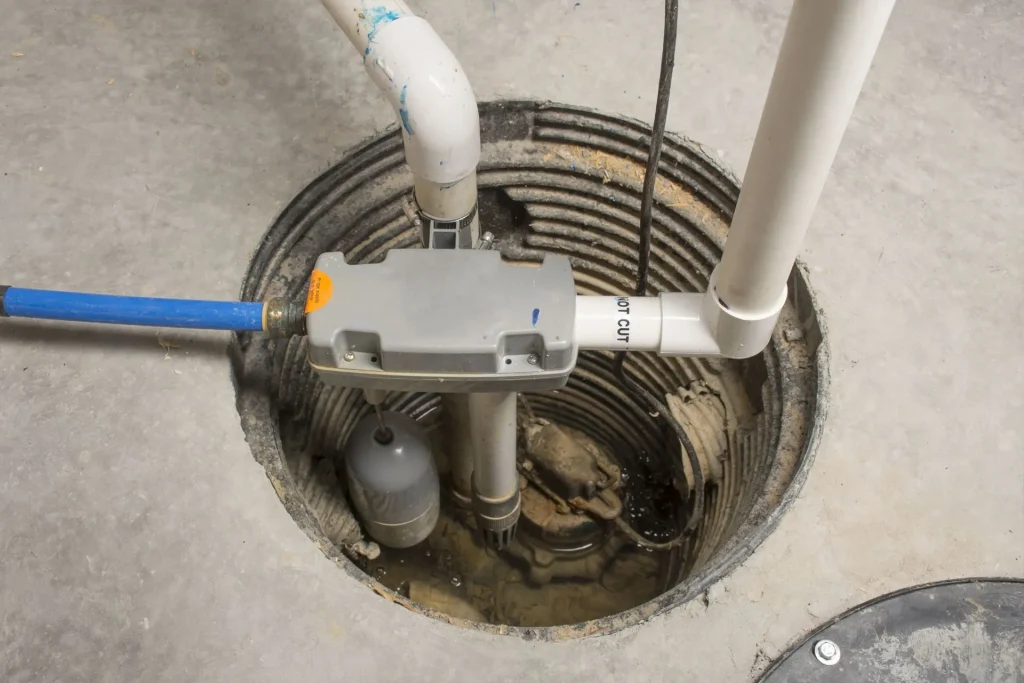
At its simplest, a sump pump collects groundwater in a pit, usually called a sump basin, and discharges it away from the house. In a properly designed system, water is directed toward that basin through interior drain tile, under-slab drainage channels, or natural migration beneath the foundation. As water in the pit rises, a float switch or sensor activates the pump. The pump then sends water through a discharge line to the exterior, where it exits at a safe distance from the foundation.
That sounds straightforward, and in principle it is. The real value lies in timing. Water does not need to flood a basement to cause damage. Repeated dampness under flooring, elevated humidity, and minor infiltration behind finished walls can quietly lead to mold, rot, rust, and material failure. A sump pump helps intercept the problem before it crosses that threshold.
In homes with persistent groundwater issues, I have seen a sump pump make the difference between a basement that smells damp every summer and one that stays dry enough for storage, laundry, mechanical equipment, and even finished living space. It is not glamorous equipment, but it solves a practical problem with remarkable efficiency.
The most important benefit: preventing basement flooding
This is the reason most people call for a sump pump, and it remains the clearest benefit. During prolonged rain or rapid snowmelt, water can build under and around a foundation faster than passive drainage can handle. A sump pump actively removes that water.
The financial difference can be significant. Even a modest basement flood can ruin carpeting, drywall, insulation, trim, furniture, and stored belongings. If the basement contains a furnace, boiler, water heater, electrical panel, or laundry appliances, replacement costs rise quickly. In a finished basement, a single incident can easily cost several thousand dollars. In more severe cases, the number can move well into five figures once demolition, drying, mold remediation, and reconstruction are included.
What catches many homeowners off guard is that flooding is not always dramatic. Sometimes the damage comes from one inch of water, or less. Drywall wicks moisture. Base trim swells. Laminate flooring buckles. Cardboard boxes collapse and spread moisture into everything stacked near them. A sump pump reduces the chance that minor water intrusion turns into a full cleanup project.
Protection for the foundation itself
People often think of sump pumps as emergency equipment, but they also serve a structural purpose. Water pressure around the foundation can stress walls over time. In block foundations, repeated saturation can encourage seepage through joints and cells. In poured concrete walls, pressure may exploit hairline cracks or cold joints. In either case, the basement becomes part of the drainage system, which is not the role you want it to play.
By lowering water accumulation near the footing level, a sump pump helps reduce hydrostatic pressure. That does not mean it repairs structural issues, and it certainly does not replace foundation stabilization when movement is already present. What it does mean is that it can reduce one of the forces contributing to moisture intrusion and, in some cases, worsening wall distress.
This matters in New Jersey, where many homes are decades old and drainage conditions have changed over time. A property that was once surrounded by open ground may now sit among hardscaped driveways, patios, neighboring additions, and compacted soil, all of which alter runoff patterns. When water has fewer places to soak in or disperse, it often presses more aggressively against below-grade walls.
Lower humidity and better air quality
Not every wet basement problem involves standing water. In many homes, the complaint is odor. The basement smells earthy, stale, or plainly moldy, especially in late spring and summer. That smell is often tied to moisture entering through the floor slab, wall joints, or minute seepage points that never produce a visible puddle.
A sump pump can help here by controlling groundwater before it contributes to damp conditions. When paired with proper drainage and, if needed, a dehumidifier, it can make a meaningful difference in basement air quality. That has practical implications well beyond comfort.
Moisture in a basement does not stay in the basement. Air moves through a house, and a surprising amount of it can rise from lower levels into the living areas above. If the basement is persistently damp, that moisture and odor often spread upstairs. Family members may notice allergies acting up, fabrics taking on a stale smell, or indoor humidity remaining high even with air conditioning running.
A dry basement supports a healthier house. It helps limit mold growth on organic materials, reduces the chance of dust mite activity in humid conditions, and protects framing, subflooring, and stored items from slow moisture damage.
Protecting finished basements and home investments
Over the last several years, many New Jersey homeowners have invested heavily in finished basements. Some want a family room, home office, gym, guest suite, or playroom. Others simply need more usable square footage. The more valuable that lower level becomes, the less sensible it is to leave water management to chance.
A sump pump is often one of the least expensive parts of a basement finishing project, yet it can protect some of the most expensive components. Flooring, built-ins, recessed lighting, insulation, paint, interior doors, and furniture all depend on a dry environment. If a basement is finished without reliable water control, the homeowner is effectively gambling that exterior conditions, aging drains, and future storms will never overwhelm the space. That is not a wise bet in much of New Jersey.
I have walked through basements where everything looked beautiful six months after a remodel, only for trouble to show up after the first period of sustained rainfall. Moisture found the weak point, usually at the cove joint where the wall meets the floor. The owners were stunned because there had never been a major flood before. That is common. Finishing a basement changes the stakes. Minor seepage that once dried unnoticed now damages finished materials.
Safeguarding mechanical systems and utilities
Many basements house critical systems that homeowners cannot afford to lose. Boilers, furnaces, water heaters, electrical panels, water treatment equipment, internet infrastructure, and laundry appliances are often located below grade. When water reaches these systems, the issue is not only repair cost but also disruption.
A failed water heater or damaged furnace in winter creates immediate stress. Electrical concerns add safety risks. If the basement stores replacement filters, paint, tools, seasonal decorations, archived documents, or family keepsakes, the losses become personal as well as financial.
A sump pump serves as a form of asset protection. It helps keep the basement floor dry during the moments when these systems are most vulnerable, especially during storms, when power fluctuations, high runoff, and clogged drains can all happen at once.
The resale value angle
Buyers notice basements. They notice odors, stains, efflorescence, dehumidifiers running full time, and painted-over cracks. Even if they cannot identify the technical cause, they recognize when a lower level feels damp or neglected. Home inspectors do too.
A properly installed sump pump, especially as part of a documented waterproofing system, can reassure buyers that the home has been maintained with moisture control in mind. It will not erase every concern if there are visible structural issues or unresolved drainage defects, but it does signal that the property has a practical strategy for managing groundwater.
In competitive housing markets, dry storage, clean utility areas, and usable basement space add real appeal. Buyers are often more comfortable with a basement that includes a visible sump system than with one that claims to have “never had a problem” despite clear signs of past moisture. Experience has taught many people that absence of evidence is not evidence of absence when it comes to water.
Where a sump pump fits within Basement Waterproofing NJ
The phrase Basement Waterproofing NJ can mean several different approaches, and that is where homeowners sometimes get confused. A sump pump is not a standalone cure for every water issue. It works best as one component in a system shaped by the actual source of the problem.
If roof runoff is dumping next to the house because downspouts are too short, a sump pump should not be the first fix. If grading slopes toward the foundation, that needs correction. If there is a large foundation crack admitting direct water entry, repair is necessary. If the basement is humid because of unvented appliances or poor air control, drainage alone may not solve the problem.
Still, when groundwater pressure is involved, a sump pump is often the central active component that makes the rest of the system effective. Interior perimeter drains collect water. The sump basin receives it. The pump removes it. Without that final step, the collection system has nowhere to send water.
The best waterproofing plans are tailored. One house may need exterior drainage improvements and a single pump. Another may need interior drain tile, vapor barriers on foundation walls, crack repair, and battery backup. The point is not to buy hardware first and ask questions later. The point is to understand the water behavior of the property and respond accordingly.
Choosing the right type of sump pump
Not all sump pumps are equal, and this is one area where going with the cheapest option often backfires. The right pump depends on basin size, water volume, head height, discharge path, and how critical basement dryness is for the homeowner.
Submersible pumps sit inside the basin and tend to be quieter. Pedestal pumps keep the motor above the pit and can be easier to service, though they are often noisier and less discreet. For most finished or semi-finished basements, submersible units are the preferred choice because they contain sound better and keep the setup cleaner.
Horsepower matters, but bigger is not always better. An oversized pump that cycles too frequently can wear faster. An undersized pump may struggle during peak inflow. In many homes, one-third to one-half horsepower is common, but real conditions should drive the selection, not generic assumptions.
The most practical features are often the least flashy. A durable float mechanism, a proper check valve, a sealed basin cover where appropriate, and a discharge line protected from freezing matter more than marketing language. So does access for maintenance. A sump system should be easy to inspect, easy to test, and installed with service in mind.
The value of a battery backup system
Power outages and heavy storms often arrive together. That single fact explains why backup systems are so important. A primary sump pump can be perfectly installed and still fail to protect the basement if the electricity goes out during peak water inflow.
For homes with a history of water intrusion, a battery backup pump is not an extra. It is a sensible layer of protection. These systems kick on when the primary pump fails or when the power is out. Some also provide alarms or monitoring, which can be useful for homeowners who travel or who do not visit the basement every day.
Water-powered backup pumps exist too, though they depend on municipal water pressure and are not suitable in every situation. They can be effective in certain homes, but they require evaluation based on local plumbing conditions and water usage considerations.
If there is one upgrade I recommend more often than almost any other, it is backup power for a sump system. Homeowners tend to appreciate it most after the storm that would have flooded the basement but did not.
Signs a home may need a sump pump
Some indicators are obvious, but others are easy to dismiss until the pattern becomes costly. Homeowners should pay attention to a basement that feels damp after rain, shows white mineral deposits on masonry, develops repeated mold on stored items, or takes on water at the floor-wall joint. Rust on metal shelving near the floor, peeling paint on lower walls, and repeated dehumidifier overload can also point to groundwater influence.
The strongest clues often come from timing. If moisture problems spike during prolonged rain, late winter thaw, or hurricane season, the issue is likely tied to changing subsurface water conditions rather than a one-time plumbing leak.
Here are some common warning signs worth taking seriously:
- Water entering where the wall meets the floor
- A musty odor that returns after storms
- Efflorescence or damp spots on basement walls
- Previous flooding, even if it happened only once
- A neighborhood history of wet basements or high groundwater
One flood is enough to justify a serious evaluation. Homeowners sometimes assume that because a problem happened only during an extreme weather event, it does not warrant a permanent solution. In practice, those “once in ten years” storms rarely stay that rare.
Installation quality matters more than many homeowners realize
A sump pump can be excellent on paper and still perform poorly if installation is careless. The basin must be placed where water naturally collects or where the drainage system directs it. The pit must be deep and wide enough for the pump and inflow volume. The discharge line must move water far enough from the foundation that it does not simply cycle back into the same soil. Check valves must be installed correctly to prevent water from falling back into the pit after each cycle.
This is where field experience matters. For example, I have seen discharge lines exit a house only a few feet from the wall, right beside a walkway that trapped runoff. The pump was technically working, but the basement stayed wet because the water had nowhere meaningful to go. I have also seen pits installed without proper gravel preparation, causing sediment buildup that shortened pump life.
Good installation includes thinking through winter conditions. In New Jersey, discharge piping that is too exposed, too flat, or poorly terminated can freeze. When that happens, the pump may run but have nowhere to send water. Pressure builds, performance drops, and the basement can flood despite having a pump.
Maintenance is simple, but it cannot be ignored
Sump pumps are not high-maintenance devices, but they should not be forgotten. A quick inspection a few times a year goes a long way. The basin should be free of debris, the float should move freely, and the pump should activate when tested. Backup batteries should be checked according to manufacturer guidelines. If the system has an alarm, homeowners should confirm it still works.
A practical routine looks like this:
- Test the pump before spring rains and before hurricane season
- Clear debris from the pit and inspect the float switch
- Check that the discharge line is unobstructed
- Confirm the backup system is charged and functional
- Listen for changes in cycling frequency or unusual noise
Those few minutes of attention can prevent a great deal of trouble. Most sump pump failures do not come out of nowhere. They often follow neglected maintenance, worn switches, sediment buildup, or a backup system that quietly stopped holding a charge months earlier.
Cost versus long-term savings
Homeowners naturally ask whether a sump pump is worth the expense. In most basements with recurring moisture or flood risk, the answer is yes, especially when weighed against what even one water incident can cost.
Actual pricing varies based on whether the house already has a basin, whether interior drainage must be added, what type of pump is chosen, and whether battery backup is included. A straightforward replacement is one thing. A full waterproofing system with perimeter drainage is another. The right comparison is not the pump cost versus doing nothing. It is the pump cost versus the likely cost of damage, cleanup, lost use of the space, and lower property appeal if the moisture issue continues.
That math usually becomes clear very quickly in homes with finished basements, expensive mechanical systems, or past water entry. Even in unfinished basements, ongoing moisture can shorten the life of appliances, encourage mold, and limit how the space can be used.
The bigger picture
A sump pump is not a magic device, but it is one of the most effective tools available for managing basement water in the right conditions. For many New Jersey homes, especially those with groundwater pressure or a history of seepage, it provides reliable, automatic defense against the kind of damage that tends to arrive at the worst possible time.
When homeowners think about Basement Waterproofing NJ, it helps to shift the question from “How do I stop this puddle?” to “How does water behave around this house, and what system will control it consistently?” Often, the sump pump is the answer at the center of that system. It reduces flood risk, protects the foundation, lowers humidity, preserves finished spaces, and supports the long-term value of the home.
The key is to treat it https://augustlxug239.fairmontdigest.com/posts/basement-waterproofing-nj-trends-every-new-jersey-homeowner-should-know as part of a smart plan, not a box to check. When properly selected, properly installed, and properly maintained, a sump pump does exactly what good waterproofing should do. It gives water a controlled path out, so it stays out of the place you live.
ARD Waterproofing
Address: 98 Smull Ave, West Caldwell, NJ 07006
Phone number: +12016465936
FAQ About Basement Waterproofing NJ
What is the best waterproofing method for a basement?
The best overall approach to waterproofing a basement is a combined exterior and interior system that stops water at the foundation wall and safely manages any moisture that gets through.
What is the average cost to waterproof a basement?
The average cost to waterproof a basement ranges from $2,500 to $15,000, with most homeowners paying around $5,200 for a complete project.
Can a basement be waterproofed from the inside?
Yes, a basement can be waterproofed from the inside, and it is often the most affordable and least disruptive method.